
Hinduism in Bangladesh: From Ancient Bengal to Modern Times
The history of Hinduism in Bangladesh cannot be understood without first understanding the history of Bengal itself. Long before the creation of Bangladesh in 1971, and even before the Partition of India in 1947, the territory that now forms Bangladesh was an integral part of the ancient and historic region of Bengal. For thousands of years, Bengal was a unified land bound together by its rivers, language, culture, and traditions. Hinduism was one of the earliest religions to flourish in the region, leaving behind a rich legacy of temples, literature, philosophy, art, and architecture that continues to influence the cultural identity of Bangladesh today.
Ancient Bengal was home to powerful kingdoms such as Vanga, Pundravardhana, Samatata, and Gauda. Hinduism spread throughout these kingdoms alongside Buddhism, making Bengal one of the most important centers of learning and spirituality in South Asia. During the Gupta Empire (4th–6th centuries CE), Hindu philosophy, Sanskrit literature, and temple construction flourished. Later, the Buddhist Pala Empire ruled much of Bengal between the 8th and 12th centuries, supporting renowned institutions such as Nalanda and Vikramashila. The Sena dynasty, which followed the Palas, revived Hindu traditions by promoting Shaivism and Vaishnavism and constructing numerous temples across the region.
The arrival of Muslim rulers in Bengal during the 13th century marked the beginning of a new chapter in the region’s history. Islam gradually spread through the efforts of Sufi saints, trade, migration, and political expansion. Despite these changes, Hindu communities remained an important part of Bengal’s social fabric. For centuries, Hindus and Muslims lived side by side, sharing the Bengali language, local customs, literature, music, and artistic traditions while practicing different religions. Under the Mughal Empire, Bengal became one of the richest provinces in the world, famous for its agriculture, textiles, and international trade.
In 1757, following the Battle of Plassey, the British East India Company established control over Bengal, ushering in nearly two centuries of colonial rule. Bengal became the political, economic, and intellectual center of British India, with Calcutta serving as the capital until 1911. This period witnessed the Bengal Renaissance, a remarkable movement that transformed education, literature, science, and social reform. Great thinkers such as Raja Ram Mohan Roy, Ishwar Chandra Vidyasagar, Bankim Chandra Chattopadhyay, and Swami Vivekananda emerged from Bengal, advocating women’s education, social justice, religious reform, and national awakening. Their influence extended far beyond Bengal and shaped the modern history of India.
In 1905, the British administration partitioned Bengal into Eastern Bengal and Assam, which had a Muslim majority, and Western Bengal, which had a Hindu majority. Although the British claimed the partition was intended to improve administrative efficiency, many Indian leaders believed it was an attempt to divide communities and weaken the growing independence movement. The decision sparked the Swadeshi Movement, one of India’s earliest mass nationalist campaigns, leading to widespread protests, economic boycotts, and calls for unity. Due to sustained public opposition, the British annulled the partition in 1911, reuniting Bengal.
As British rule drew to a close, political tensions between the Indian National Congress and the All-India Muslim League intensified over the future of the subcontinent. The Muslim League demanded a separate nation for Muslims, while many others advocated for a united India. When British India gained independence in August 1947, it was simultaneously partitioned into the independent nations of India and Pakistan. Bengal was divided along religious lines. The western districts, where Hindus formed the majority, became the Indian state of West Bengal. The eastern districts, with a Muslim-majority population, became East Bengal, later renamed East Pakistan, even though it was geographically separated from West Pakistan by more than 1,600 kilometers of Indian territory.
The Partition of 1947 triggered one of the largest and most traumatic migrations in human history. Millions of Hindus left East Bengal for India, while many Muslims migrated from India into East Pakistan. Families were separated, ancestral homes were abandoned, and countless people lost their lives during communal violence. Although a substantial Hindu population remained in East Pakistan, the demographic balance changed significantly as migration continued over subsequent decades.
The political relationship between East and West Pakistan became increasingly strained. Despite having a larger population, East Pakistan received less political representation and economic investment than the western wing. The attempt to impose Urdu as Pakistan’s sole national language led to the Bengali Language Movement in 1952, during which students sacrificed their lives while demanding recognition of Bengali. This movement became a defining symbol of Bengali identity and laid the foundation for future demands for autonomy.
Political tensions reached their peak after the 1970 general elections, when the Awami League, led by Sheikh Mujibur Rahman, secured a parliamentary majority but was denied the opportunity to form the government. On 25 March 1971, the Pakistan Army launched a military operation in East Pakistan, leading to widespread violence, mass displacement, and a humanitarian crisis. Millions of refugees, including many Hindus, fled to India seeking safety. India intervened in the conflict in December 1971 after months of escalating tensions and a massive refugee influx. The war concluded with the surrender of Pakistani forces on 16 December 1971, resulting in the birth of the independent nation of Bangladesh.
Today, Hinduism is the second-largest religion in Bangladesh after Islam. Hindus constitute approximately 7 to 8 percent of the country’s population, representing more than 13 million people. They are concentrated in districts such as Gopalganj, Khulna, Satkhira, Dinajpur, Jessore, Thakurgaon, Chattogram, and Sylhet, though Hindu communities can be found throughout the country. Bengali remains their primary language, and they continue to preserve religious traditions while participating actively in national life.
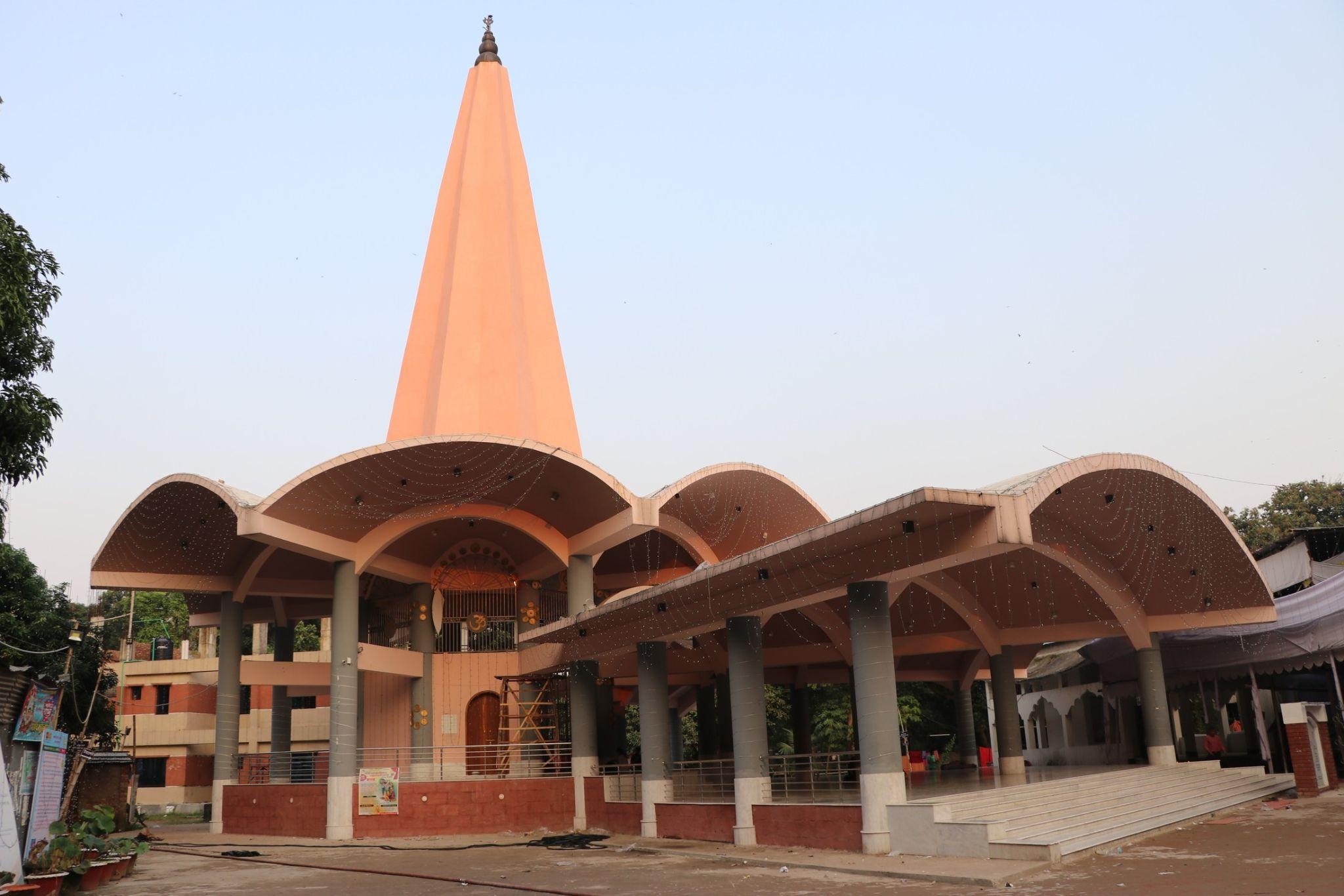
Dhakeswari Temple in Dhaka
Hindu festivals remain an essential part of Bangladesh’s cultural calendar. Durga Puja is the largest and most significant celebration, with thousands of beautifully decorated pandals established across the country each year. Other important festivals include Kali Puja, Saraswati Puja, Janmashtami, Lakshmi Puja, Shivaratri, Rath Yatra, and Holi. These celebrations often attract participation from people of different faiths and reflect the country’s long tradition of cultural coexistence.
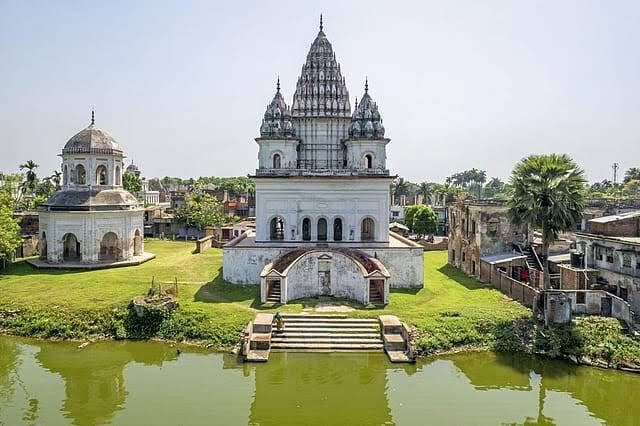
Bangladesh also preserves numerous ancient Hindu temples and pilgrimage sites that testify to the region’s rich religious heritage. The Dhakeshwari National Temple in Dhaka, widely regarded as the national temple of Bangladesh, remains one of the country’s most revered Hindu shrines. Other notable sites include the Kantaji Temple in Dinajpur, famous for its terracotta architecture, and the Jeshoreshwari Kali Temple in Satkhira, one of the revered Shakti Peethas in Hindu tradition. These monuments continue to attract devotees, historians, and tourists alike.
The Hindu community has made lasting contributions to Bangladesh’s development in education, literature, medicine, business, law, science, music, and public service. Many distinguished scholars, artists, judges, physicians, entrepreneurs, and political leaders from the Hindu community have played significant roles in shaping the country’s institutions and cultural identity. Their contributions remain an integral part of Bangladesh’s national heritage.
Despite these achievements, the Hindu minority has also faced challenges since independence. Periodic incidents of communal violence, attacks on temples, land disputes, and concerns regarding minority rights have affected sections of the community. These incidents have prompted domestic and international calls for stronger protection of religious minorities. Successive governments have publicly condemned such attacks and have, at various times, increased security during major Hindu festivals and initiated legal action against those responsible. Human rights organizations continue to advocate for equal protection under the law and the preservation of Bangladesh’s pluralistic traditions.
The Constitution of Bangladesh guarantees freedom of religion and affirms the right of every citizen to profess, practice, and propagate their faith. Hindu organizations, educational institutions, and cultural groups continue to work toward preserving religious traditions, supporting community welfare, and promoting interfaith dialogue. Efforts by civil society, religious leaders, and government institutions have also encouraged peaceful coexistence and greater mutual understanding among Bangladesh’s diverse religious communities.
The story of Hinduism in Bangladesh is inseparable from the history of Bengal itself. It is a history that stretches back thousands of years through ancient kingdoms, empires, colonial rule, partition, liberation, and nation-building. Although political borders divided Bengal into West Bengal in India and Bangladesh, the people on both sides continue to share a common Bengali language, literary heritage, cuisine, music, and cultural traditions. Hinduism remains an enduring part of Bangladesh’s identity, reflecting the resilience of a community that has preserved its faith and heritage through centuries of political and social change. As Bangladesh continues to develop as a modern nation, its rich Hindu legacy remains an important chapter in the country’s diverse cultural and historical narrative.